
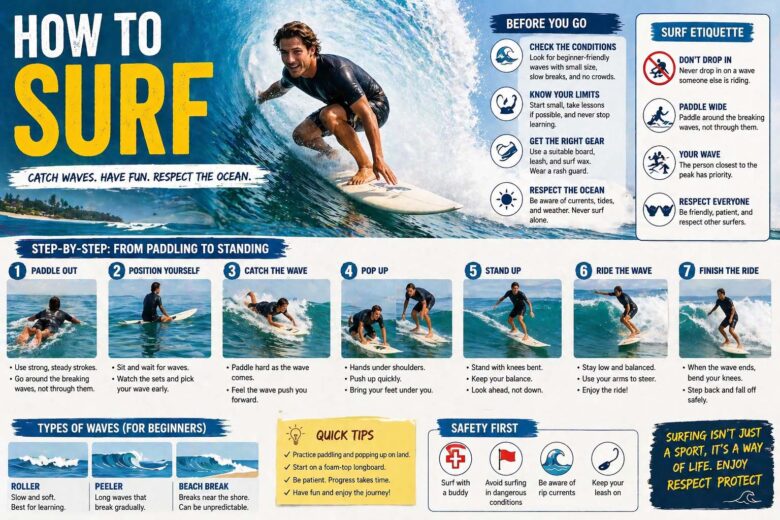
How to Surf: The Complete Beginner Guide to Mastering Waves
Learning how to surf is an exciting journey that combines fitness, balance, patience, and a love for the ocean. Many people dream of standing on a board and riding a wave toward shore, but getting started can feel intimidating. The truth is that anyone can learn how to surf with the right knowledge, practice, and mindset. Whether you want to enjoy beach adventures, improve your fitness, or challenge yourself with a new hobby, surfing offers endless rewards.
Surfing is more than just riding waves. It teaches focus, respect for nature, and confidence. Every wave is different, which means every session becomes a new learning experience. With steady practice, beginners can quickly improve and enjoy the thrill of catching waves.
Understanding the Basics of How to Surf
Before entering the water, it is important to understand the fundamentals of how to surf. Surfing begins with choosing the right board, learning to paddle, positioning yourself in the lineup, catching a wave, and standing up at the right moment. Sun protection is also important, especially for avoiding Sun Poisoning.
Most beginners should start with a longboard or foam board because these are stable and easy to balance on. Shortboards are faster and more responsive, but they are harder for new surfers to control. Picking the right beginner board can make learning smoother and more enjoyable.
The ideal place to learn is a sandy beach with small, gentle waves. Avoid rocky areas or large powerful breaks until you gain more experience. Safe beginner conditions help you focus on technique rather than survival. Travelers can research the best time to visit hawaii before planning a surfing trip.
Preparing Your Body for Surfing
When learning how to surf, physical preparation matters. Surfing uses your arms for paddling, your legs for balance, and your core for stability. A few simple exercises can improve performance in the water.
Push-ups help with paddling strength. Squats improve balance and leg endurance. Stretching your shoulders, hips, and lower back keeps your body flexible. Many surfers also practice yoga because it improves mobility and focus.
Even if you are not highly athletic, you can still learn to surf. Fitness simply helps you progress faster and enjoy longer sessions.
How to Paddle and Catch Waves
Paddling is one of the most important skills in how to surf. Lie centered on the board with your chest slightly raised. If you lie too far forward, the nose may dip underwater. Too far back, and the board slows down.
Use smooth arm strokes and keep your body streamlined. Once you spot a wave approaching, paddle harder to match the wave’s speed. Timing is crucial. If you start too early, the wave may pass underneath. If too late, you may miss the opportunity.
How to Surf Ocean Waves
Many beginners search for how to surf ocean waves because wave reading is one of the biggest challenges. Ocean waves are constantly changing due to wind, tide, and swell direction. Learning to observe the water is essential. Surfers curious about island culture may also explore what is hawaii known for.
Before paddling out, watch the lineup for several minutes. Notice where waves break consistently and where surfers are catching rides. This helps you position yourself correctly.
To surf ocean waves successfully, choose smaller waves at first. Turn toward shore, paddle strongly, and stand once the wave lifts your board.
Improving Your Pop-Up Technique
This is one of the most practiced parts of how to surf because timing and speed matter.
Practice pop-ups on land before heading into the water. Lie flat, place your hands beneath your chest, push upward, and jump your feet into surfing stance. Your front foot should land near the center of the board while your back foot stays behind for control.
How to Shield Surf BOTW
Gamers often look for how to shield surf botw, inspired by The Legend of Zelda: Breath of the Wild. In the game, players jump, raise a shield, and slide downhill with speed and style.
Although this is not ocean surfing, the concept shares similar principles. Balance, momentum, timing, and body control are important in both activities. Many players enjoy shield surfing because it captures the same thrill of gliding smoothly through an environment.
How to Shield Surf
Another related search term is how to shield surf, often used in gaming or creative sports contexts. While traditional surfing uses waves, shield surfing represents the same attraction to motion and flow.
The appeal comes from controlling movement while adapting to terrain. In real surfing, instead of slopes, you read the ocean. Instead of gravity alone, you use wave energy. Both require confidence and quick reactions.
How to Choose a Kayak for Ocean Surf
Some water sports fans also ask how to choose a kayak for ocean surf. Surf kayaking is different from traditional kayaking because it focuses on riding breaking waves near shore. Those who enjoy other ocean activities can also explore the best places to snorkel in hawaii.
Choose a kayak that is short, maneuverable, and designed for surf conditions. Stability is important for beginners, while experienced paddlers may prefer faster turning designs.
Your body size also matters. A kayak that fits properly gives better control and comfort. Safety equipment such as a helmet and life vest is recommended, especially in rough conditions.
Common Mistakes Beginners Make
Many new surfers struggle because they choose waves that are too large or boards that are too small. Others stand too early or too late. These mistakes are normal and part of learning how to surf.
Another common issue is looking down at the board. Always look where you want to go. Your body naturally follows your vision.
Why Surfing Is Worth Learning
Surfing offers much more than physical exercise. It reduces stress, builds resilience, and creates a connection with the ocean. Many surfers say the feeling of catching a wave never gets old.
Conclusion
Learning how to surf is one of the most rewarding adventures you can begin. From paddling and standing up to understanding how to surf ocean waves, every step teaches valuable skills.